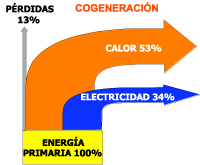
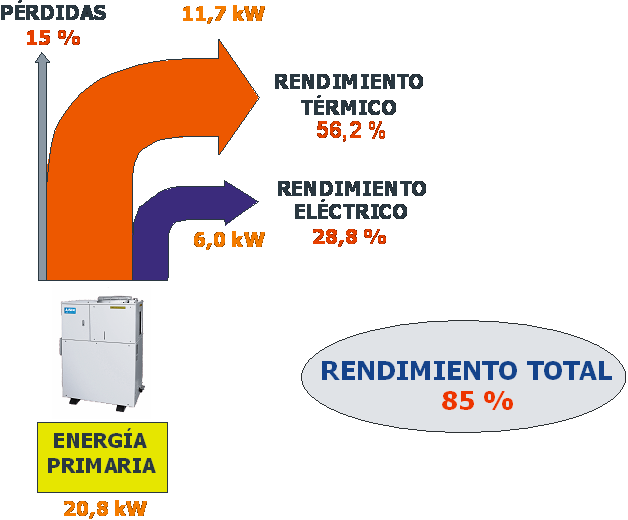
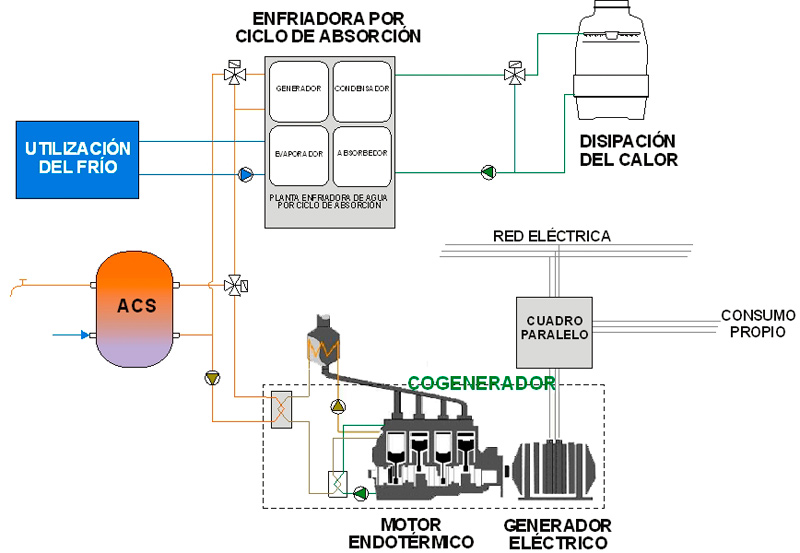
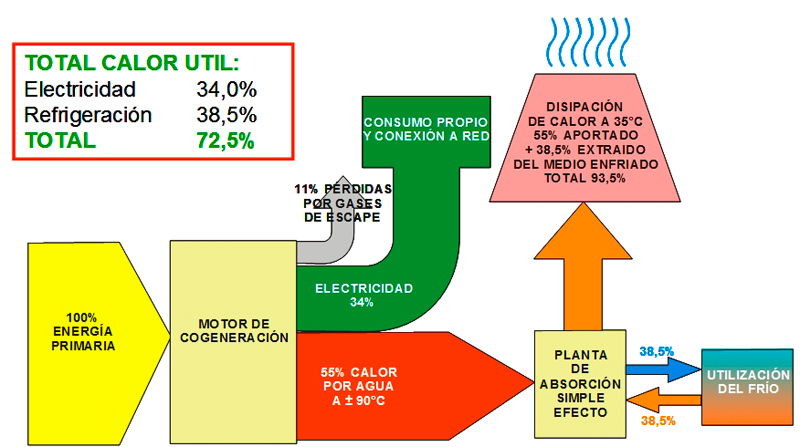
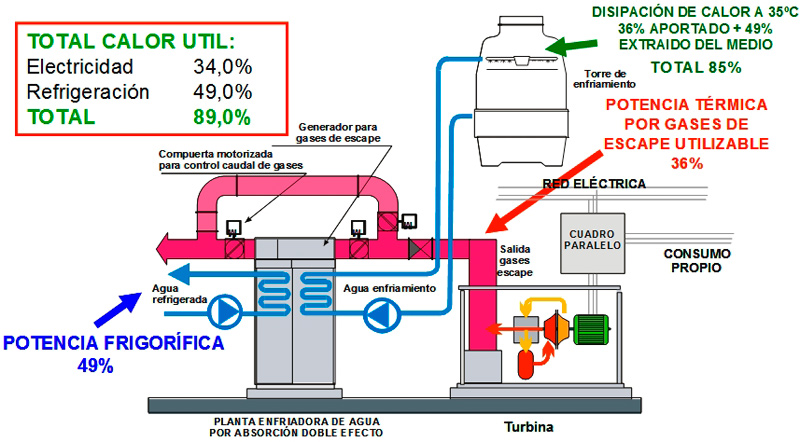
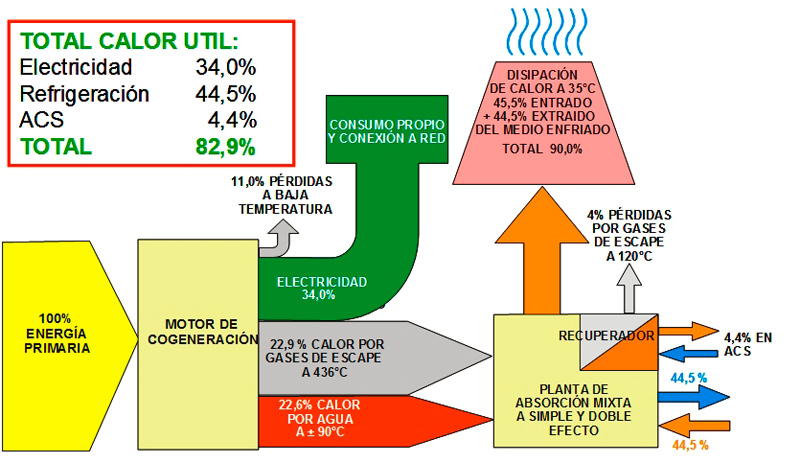
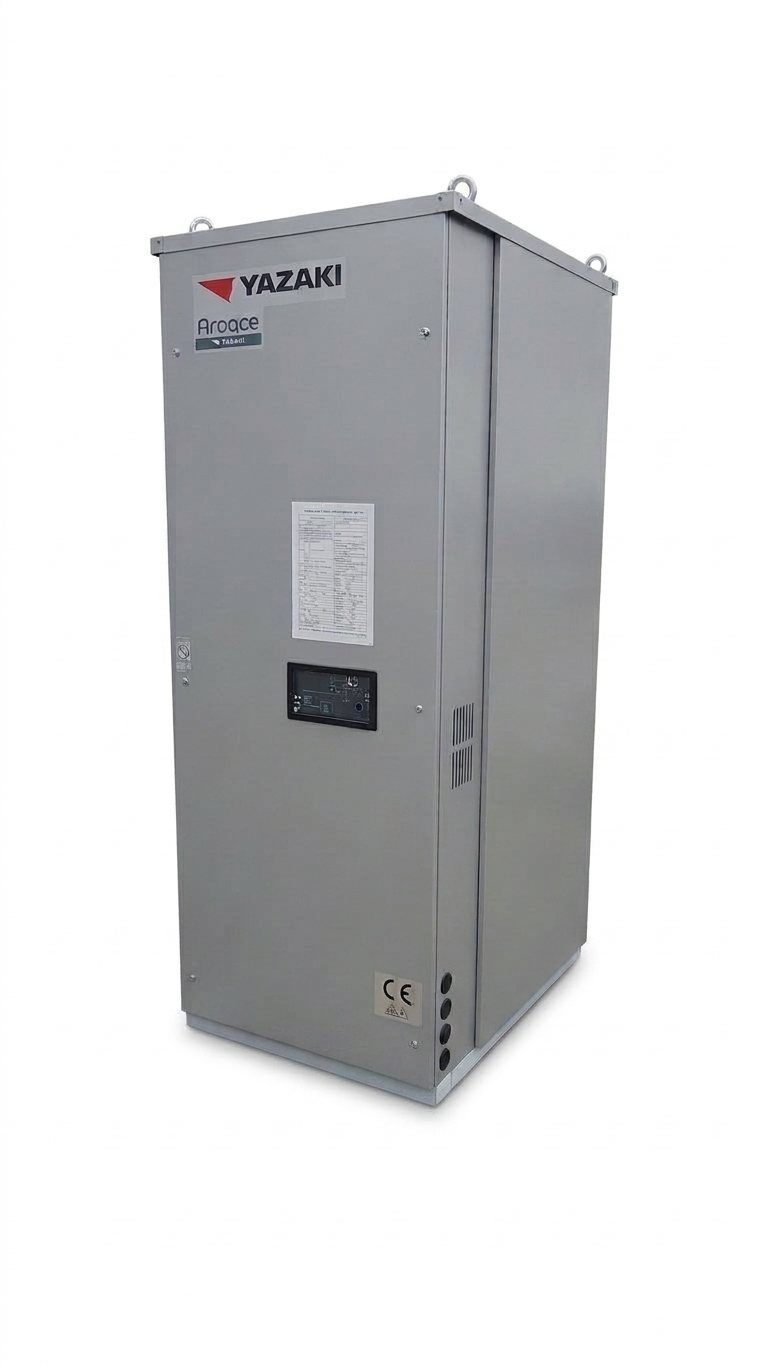
Cogeneration is the combined production, by the user, of electricity and useful thermal energy (heat) from a single fuel.
This simultaneous generation of heat and electricity makes better use of the primary energy converted than producing electricity and heat separately.
Cogeneration systems achieve overall efficiencies of around 85-90 %, which means that using electricity and heat simultaneously leads to high energy savings.
Natural gas is the primary energy most widely used to run cogeneration plants, which operate with gas turbines or gas engines. However, renewable energy sources and waste such as biomass can also be used.
Cogeneration systems are usually classified according to the prime mover used to generate electricity.
Basic cogeneration technologies
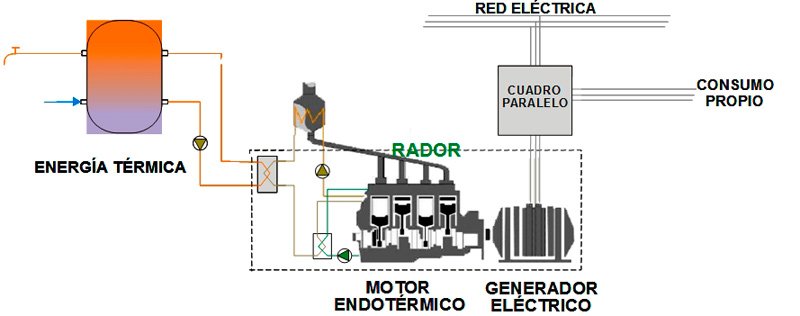
Cogeneration systems are based mainly on two electricity generation technologies: the reciprocating internal combustion engine and the gas turbine.
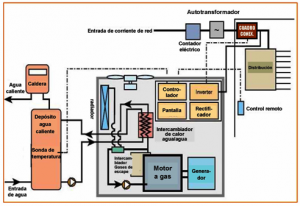
Reciprocating internal combustion engines convert the chemical energy contained in a fuel into electrical and thermal energy. A reciprocating engine works by turning the linear, reciprocating movement of the pistons into the rotation of a shaft. Electricity is obtained from an alternator coupled directly to the engine shaft, while thermal energy is obtained as exhaust gas and hot water from the cooling circuits.
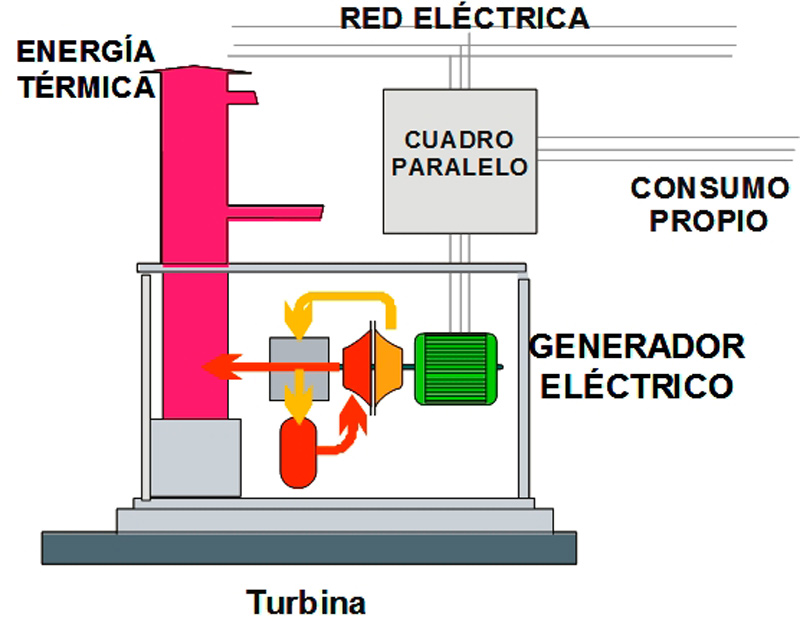
Gas turbines convert the chemical energy contained in a fuel into electrical and thermal energy.
Gas turbines follow the Brayton cycle. Air is drawn in from the atmosphere and compressed by the rotary compressor, then led to the combustion chamber, where the combustion products expand through the turbine down to atmospheric pressure. Electricity is obtained from an alternator coupled to the turbine shaft, directly or through a gearbox, which uses the net work of the cycle.