Cooling from waste heat and renewable thermal energy
Absorption chillers produce chilled water from thermal energy supplied by waste heat or renewable sources, turning an available energy resource into high-efficiency cooling capacity. The technology significantly reduces the installation’s electricity demand, increases overall energy use and helps decarbonise industrial processes and HVAC systems.
More about cooling from waste heat and renewable thermal energy
Absorption chillers produce chilled water using thermal energy from waste heat or renewable sources, turning an available energy resource into high-efficiency cooling capacity. This technology significantly reduces the installation’s electricity demand, increases overall energy use and helps decarbonise industrial processes and HVAC systems.
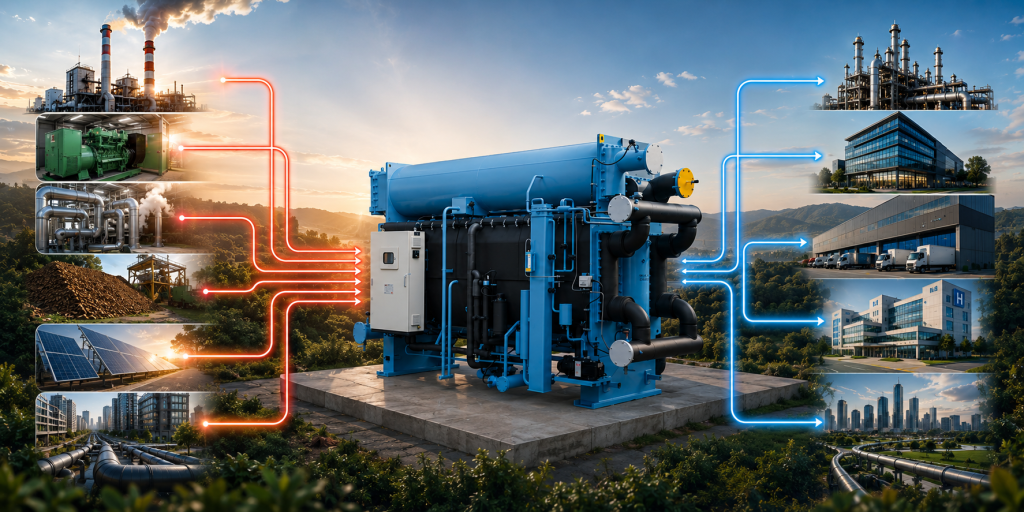
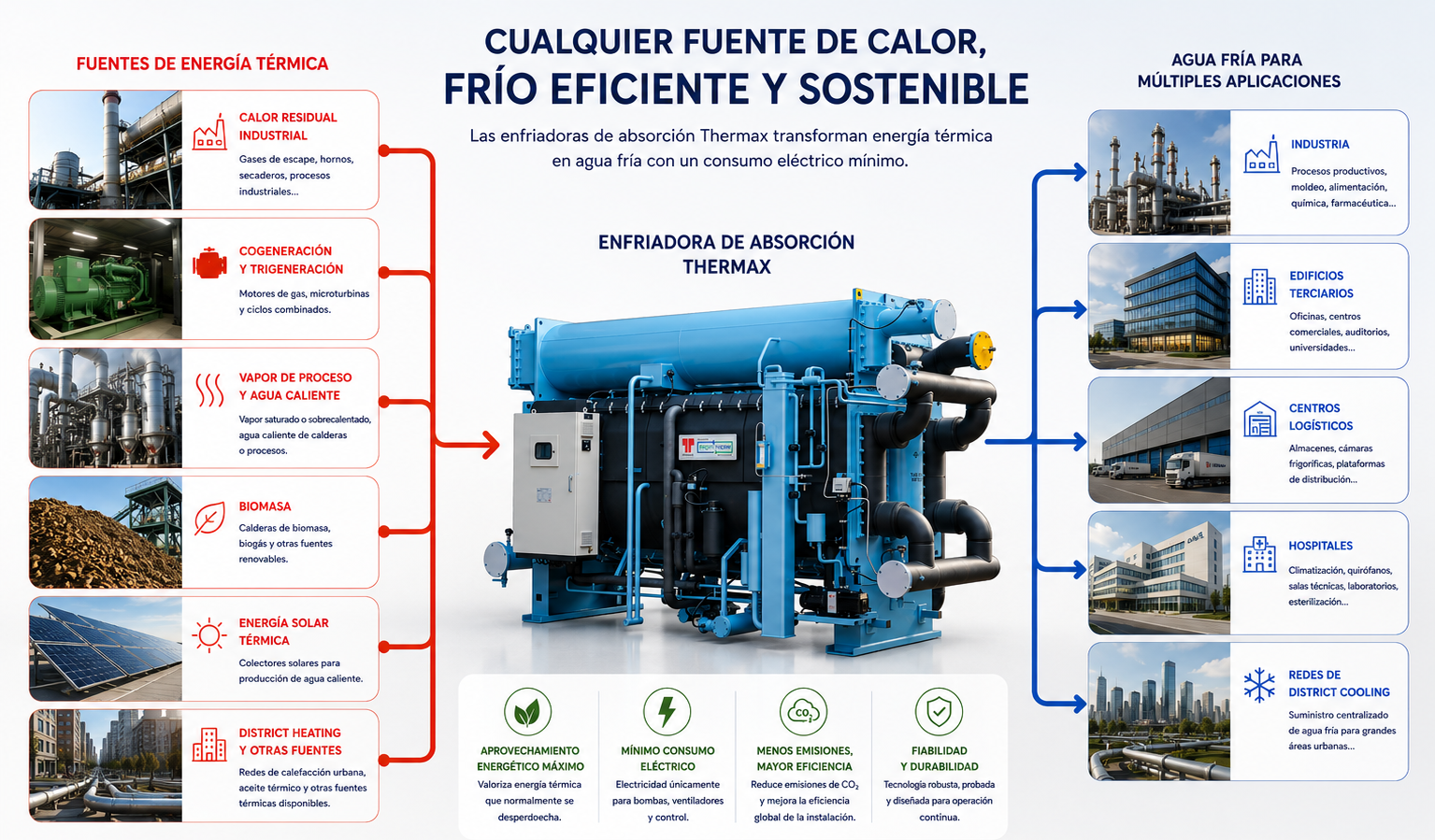
Their high flexibility means they can use hot water, steam or exhaust gas as their energy source, as well as heat from biomass, solar thermal energy, cogeneration or district heating and cooling networks. Cooling can therefore be produced sustainably wherever a heat source is available.
THERMAX absorption chillers use the lithium bromide and water cycle, in which thermal energy replaces the mechanical compressor used in conventional compression systems. This technology minimises electricity consumption, improves the installation’s energy efficiency and makes it possible to use thermal energy that would otherwise often be wasted.
Producing cooling from waste heat and renewable thermal energy is a highly efficient solution for industry, hospitals, data centres, hotels, district heating and cooling networks and large commercial buildings with a continuous cooling demand, reducing running costs and CO2 emissions without compromising the system’s reliability or performance.