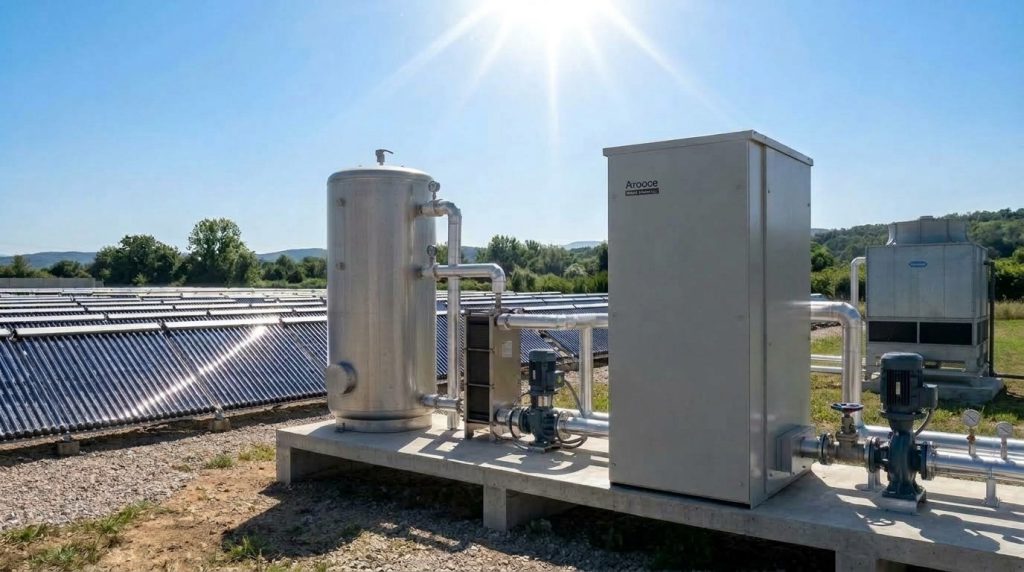
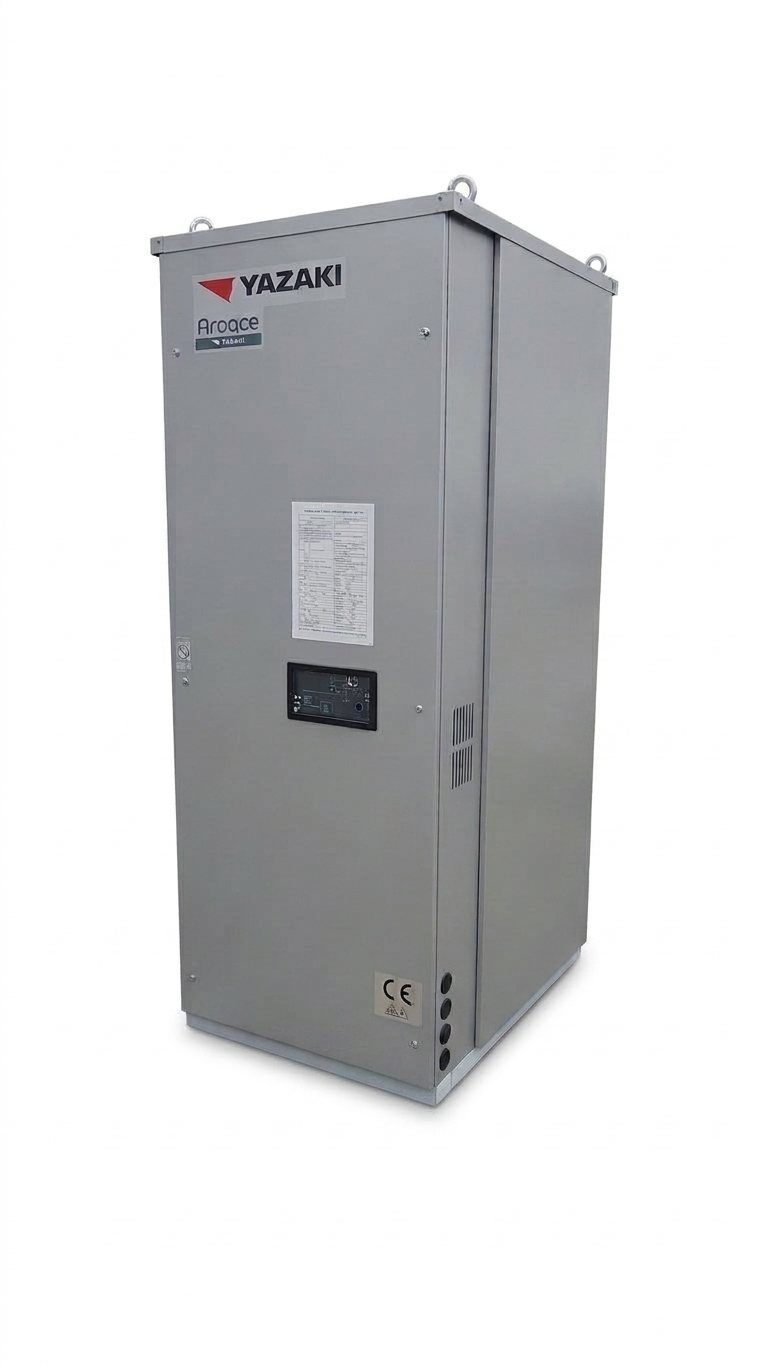
Solar cooling is one of the most efficient ways to use solar thermal energy to produce chilled water for air conditioning and industrial processes. Absorption chillers turn the heat generated by solar collectors into cooling capacity, significantly reducing the installation’s electricity consumption, CO2 emissions and running costs.
This technology is particularly attractive in buildings with a high demand for cooling and good solar radiation, where peak thermal energy production coincides with the greatest air conditioning needs, making the best use of a renewable energy source and helping to decarbonise the building.
How a solar cooling installation works
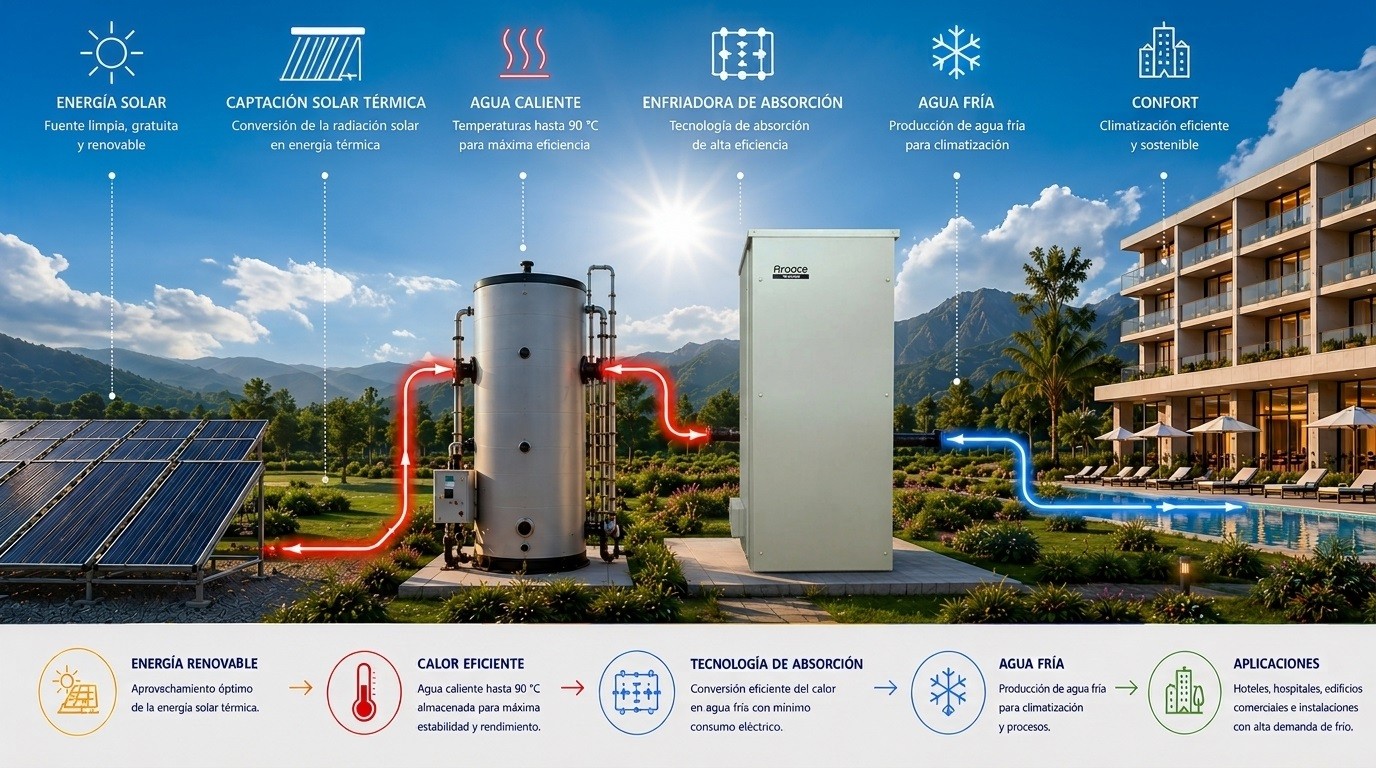
Absorption chillers use the lithium bromide – water absorption cycle (LiBr-H2O) to produce chilled water at temperatures between 3.5 ºC and 15 ºC for air conditioning or process cooling systems.
The heat needed to drive the absorption cycle comes from the hot water circuit fed by the solar thermal collectors. The chiller works best at temperatures of around 88 ºC, although cooling can be produced from about 70 ºC, depending on the operating conditions and the chiller model selected.
Replacing the electricity used by conventional chillers with solar thermal energy significantly reduces the electricity consumption associated with cooling.
Designing and optimising the installation
Sizing the solar thermal field correctly is one of the keys to maximising the installation’s performance. The collector area needed depends on the location, the solar radiation available, the type of collectors used and the required operating temperature.
Hot water storage tanks also make it possible to store the thermal energy available during periods of high solar radiation and use it later, when cooling demand exceeds the instantaneous output of the solar field, improving the installation’s overall energy use.
Main advantages
- Cooling produced from solar thermal energy.
- Significant reduction in the electricity consumption associated with air conditioning.
- Lower CO2 emissions and a smaller carbon footprint for the building.
- Use of a free, renewable energy source.
- Integration with conventional HVAC systems to optimise the installation’s overall performance.
- A contribution to decarbonisation and a better energy rating for buildings.
Applications
Solar cooling with absorption chillers is particularly suitable for:
- Hotels and resorts.
- Hospitals and healthcare centres.
- Sports centres.
- Universities and schools.
- Administrative buildings and offices.
- Shopping centres.
- District Cooling.
- Industrial processes with cooling demand.
Recommended technologies
For small and medium capacities, the most suitable solution is the YAZAKI WFC SC range, specially developed to use hot water from solar and other low-temperature heat sources.
When high cooling capacities or larger industrial applications are required, THERMAX absorption chillers, especially the TAC series, offer a highly efficient solution that adapts to larger installations.