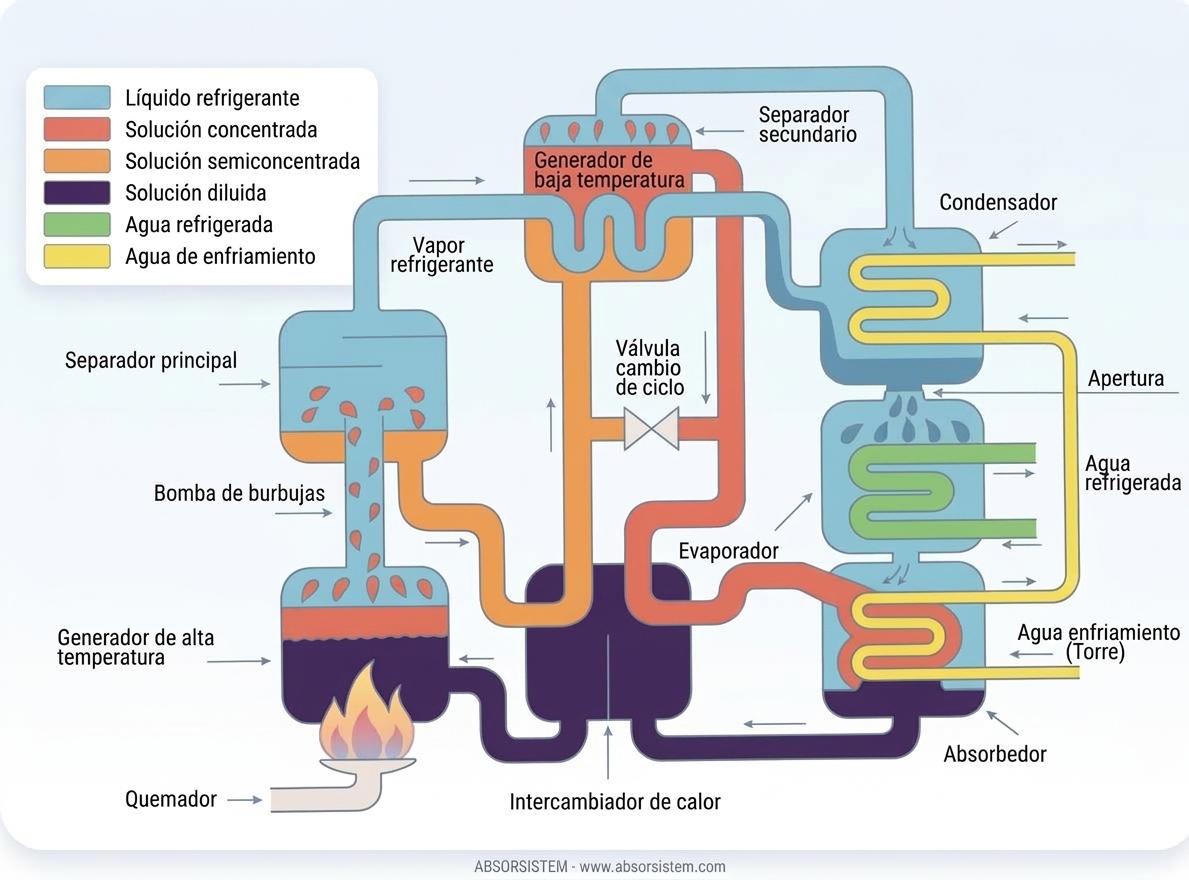
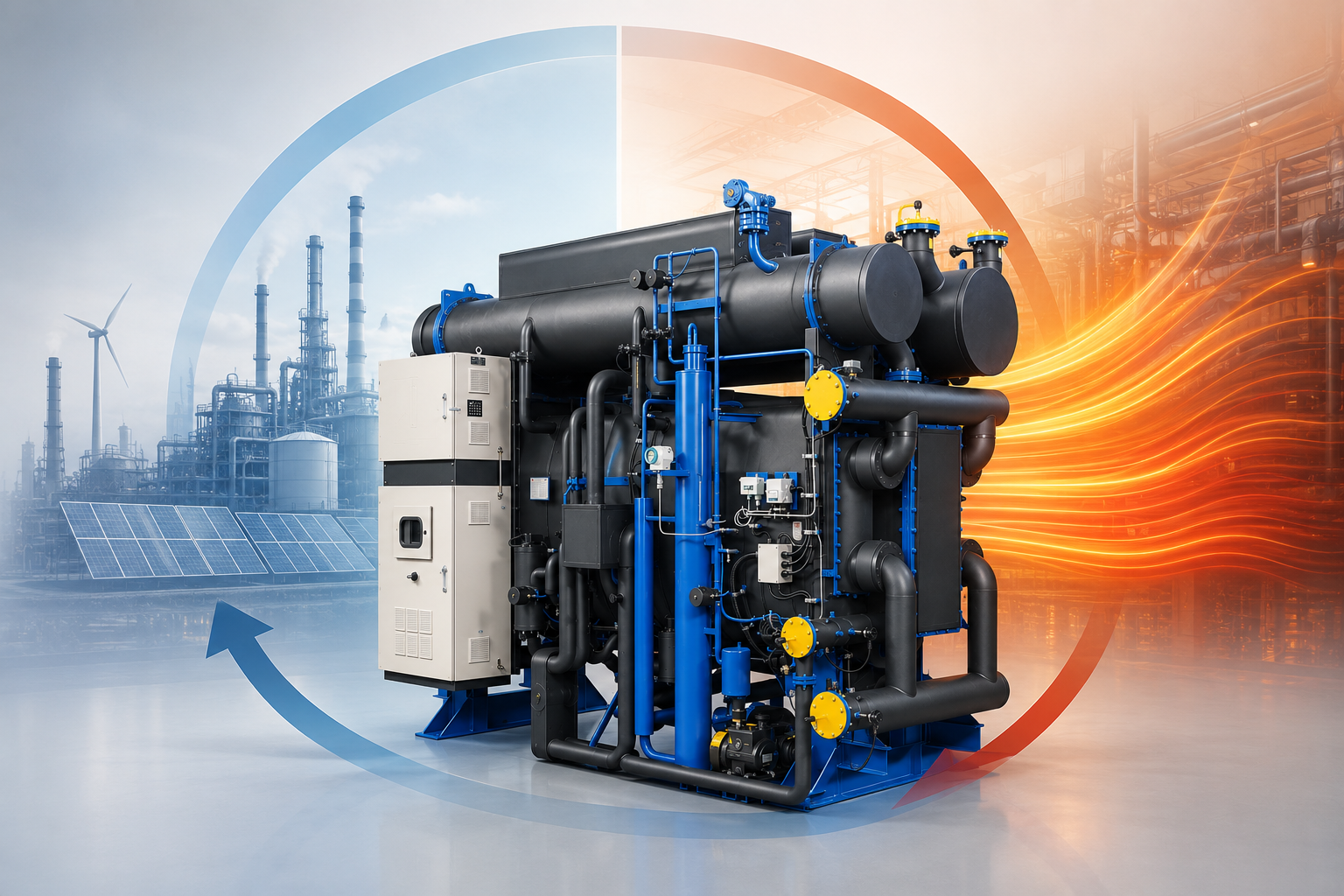
The absorption refrigeration cycle produces cooling from a supply of thermal energy, replacing the mechanical compressor of conventional compression cycles with a thermochemical system made up mainly of a generator, an absorber, a solution pump and heat exchangers.
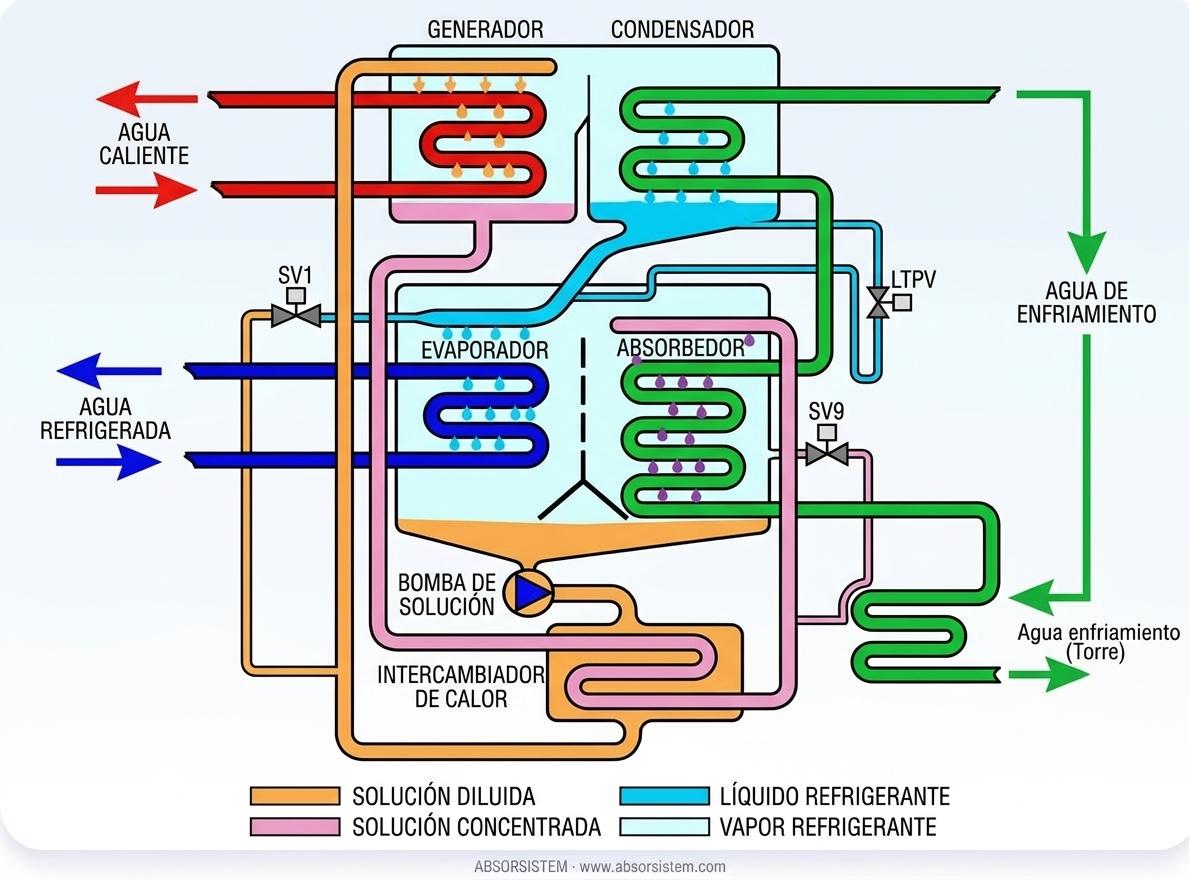
The thermodynamic principle is based on a refrigerant-absorbent pair. The refrigerant evaporates at low pressure to absorb heat and produce cooling. It is then absorbed by the absorbent, and the resulting solution is pumped to a higher pressure. Heat supplied in the generator separates the refrigerant again and closes the cycle.
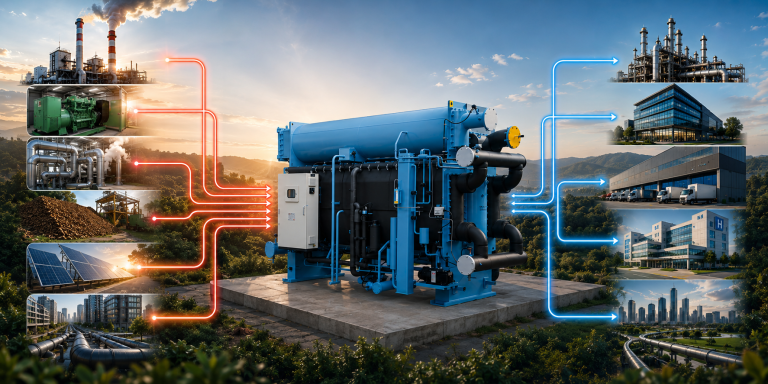
This configuration allows thermal energy to be used as the driving energy, including heat sources that cannot be used directly in a conventional compression cycle.
The main working pairs used in absorption refrigeration are:
NH₃ – H₂O cycle (ammonia – water).
H₂O – LiBr cycle (water – lithium bromide).
1.1. NH₃ – H₂O absorption cycle (ammonia – water)
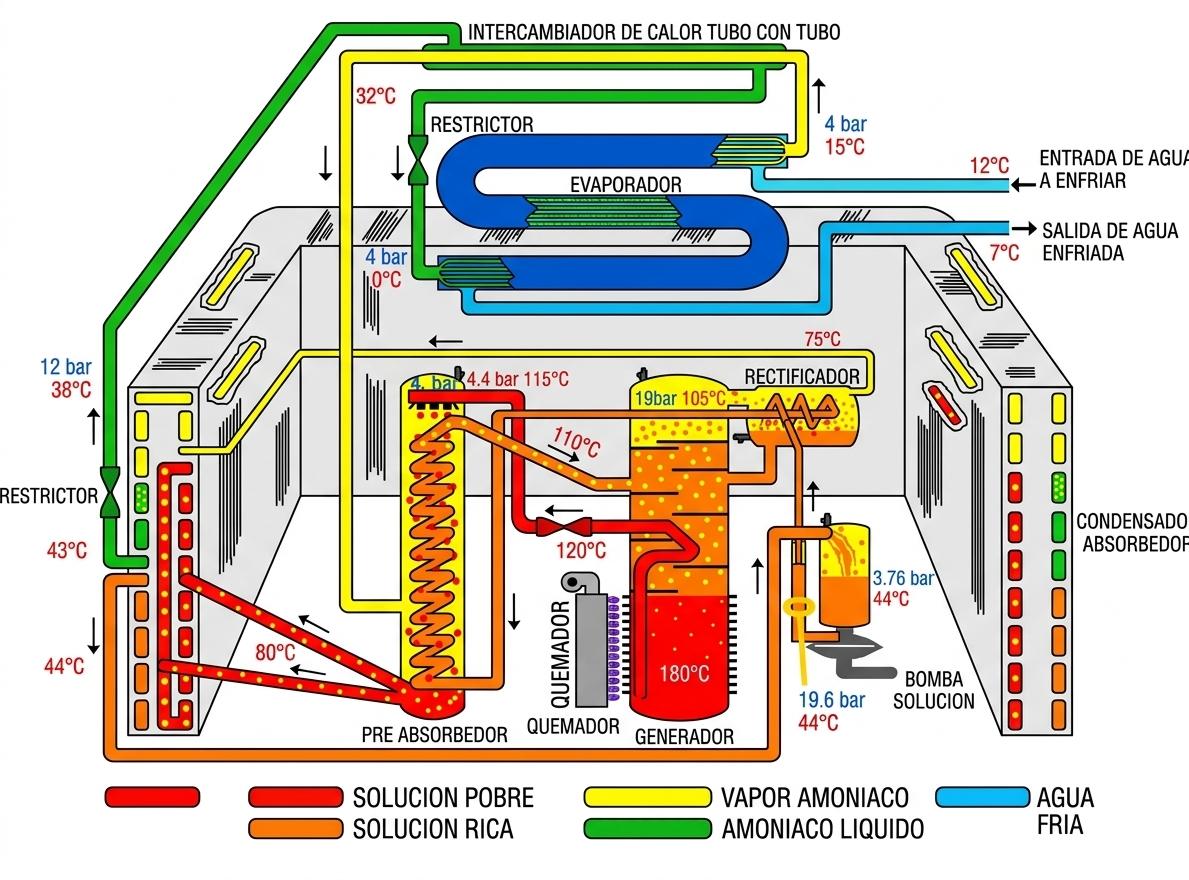
In the NH₃ – H₂O system, ammonia (NH₃) acts as the refrigerant and water (H₂O) as the absorbent.
Because the refrigerant is not limited by the freezing of water, the cycle can produce cooling at both positive and negative temperatures, and can also produce heat in absorption heat pump mode. It operates at pressures above atmospheric and can reject heat directly to the air.
Operating principle
The process takes place in the following stages:
Stage 1. Generation
The ammonia-rich solution receives thermal energy in the generator. The heat supplied separates the ammonia from the water.
Stage 2. Rectification
The ammonia vapour leaving the generator may contain small amounts of water. The rectifier reduces this before the refrigerant reaches the condenser, improving the purity of the ammonia.
Stage 3. Condensation
The high-pressure ammonia gives off heat to the heat rejection medium and condenses into a liquid.
Stage 4. Expansion
The liquid refrigerant passes through the expansion device, which lowers its pressure and temperature.
Stage 5. Evaporation
The low-pressure ammonia absorbs heat from the circuit to be cooled and evaporates. This is where the useful cooling effect is produced.
Stage 6. Absorption
The ammonia vapour from the evaporator enters the absorber and is absorbed by the water. Absorption releases heat, which must be removed to keep the cycle at the right conditions.
Stage 7. Solution pumping
The ammonia-rich solution is pumped back to the generator, closing the circuit.
Stage 8. Solution return
The weak solution in the generator returns to the absorber, giving off heat to the rich solution, and its pressure is reduced by a valve.
Cooling and heat pump
In cooling mode, the cycle extracts heat from a cold source and transfers it to a higher-temperature sink.
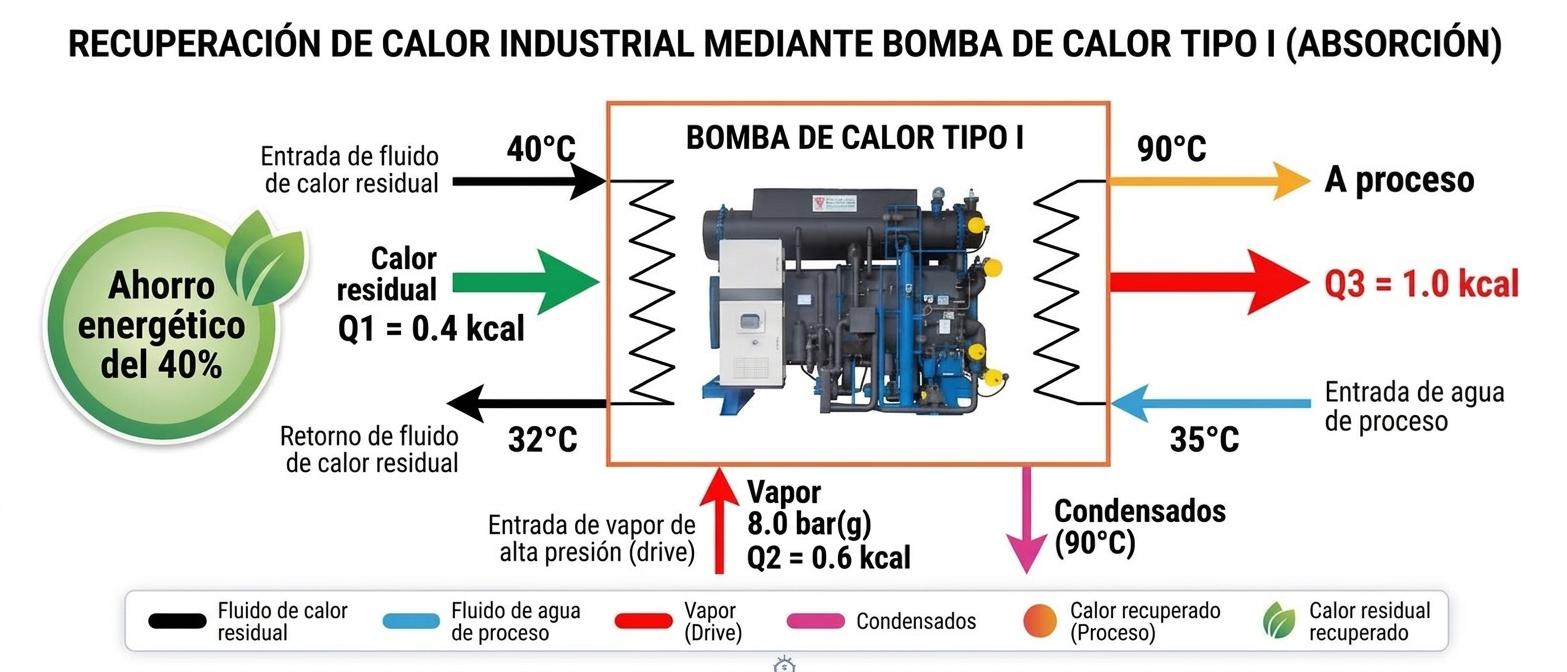
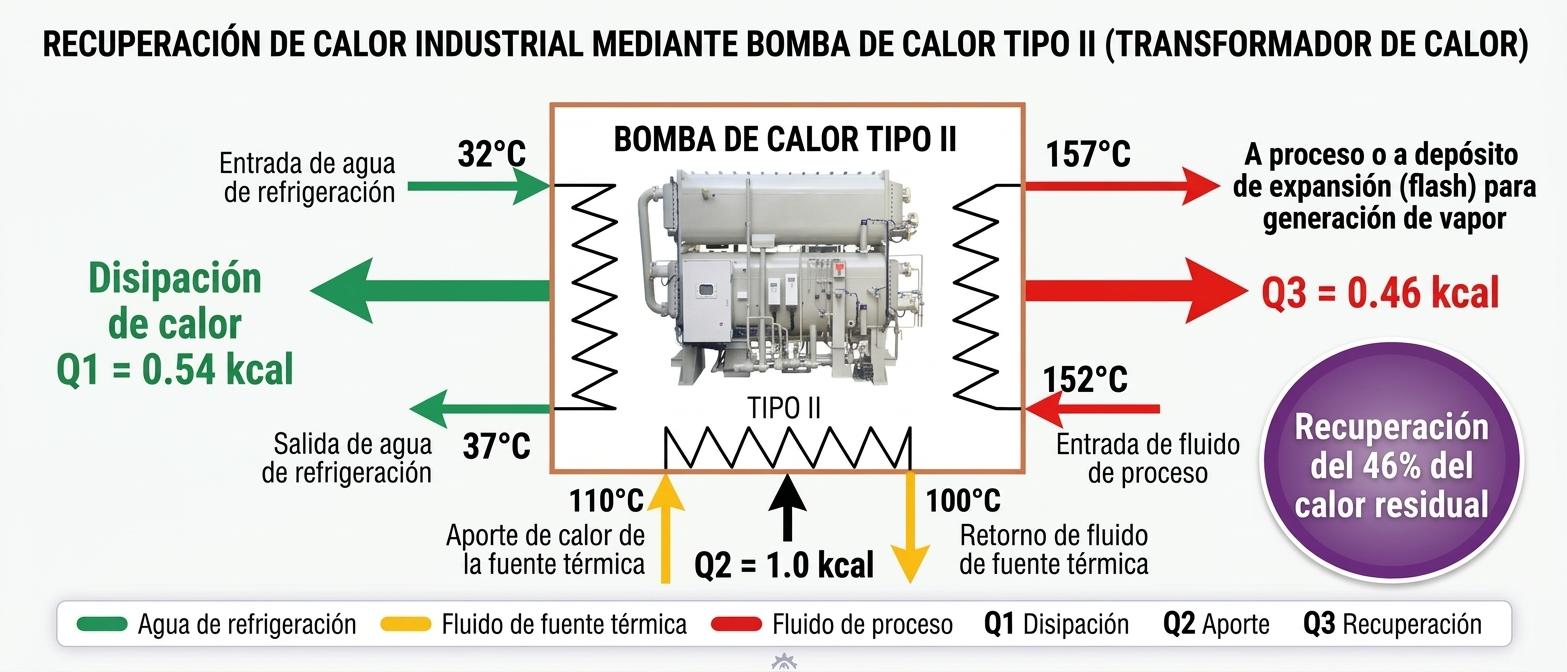
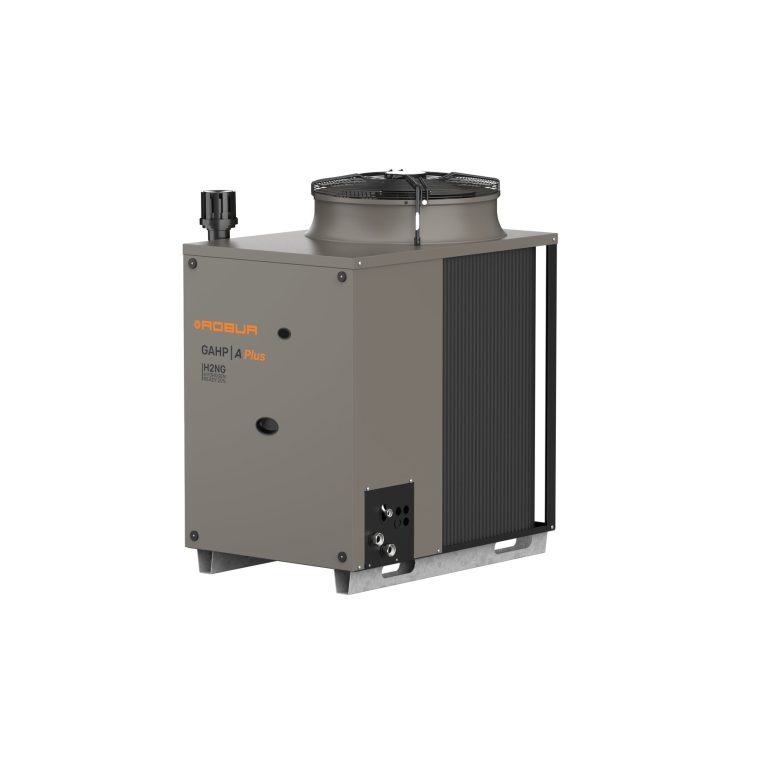
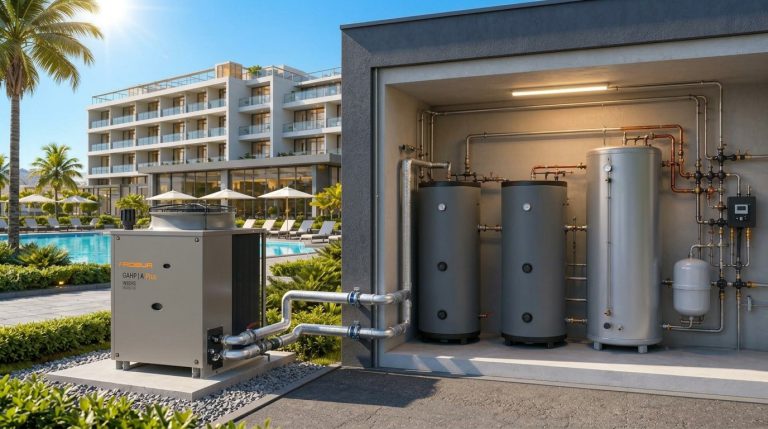
In absorption heat pump mode, the heat given off in the absorber and the condenser is the useful heat, delivered at a temperature between that of the cold source and that of the driving heat. This is the principle of gas absorption heat pumps that take energy from the air, water or the ground.